About half of rural voters identify with Make America Healthy Again, a sprawling political movement championed by the Trump administration, but most said President Donald Trump’s healthcare policies have not benefited their communities, according to a new poll from The Associated Press in partnership with KFF.
About 8 in 10 rural voters — an important voting bloc for Trump and fellow Republicans in recent elections — said the Trump administration’s policies have had a negative effect or no impact on the health of people where they live. Most MAHA supporters, 68%, also feel this way, according to the national survey of more than 2,000 rural registered voters.
The findings signal an apparent disconnect between the Trump administration’s MAHA-branded policy priorities and rural America’s perception of their reach and effectiveness.
Iowa pastor Mike Jager, 58, is a registered Republican and considers himself part of the MAHA movement. The Trump administration’s health policies have had “minimal” impact on the health of his community, Jager said, but he added that Trump’s health secretary, Robert F. Kennedy Jr., is moving the needle “in the right direction.”
“It’s a beginning,” Jager said. “It’s a big ship to try and turn around and course-correct.”
Kennedy has used the MAHA label to support various agendas, including abandoning long-standing vaccine guidance, researching ultraprocessed foods, and investing in regenerative agriculture.
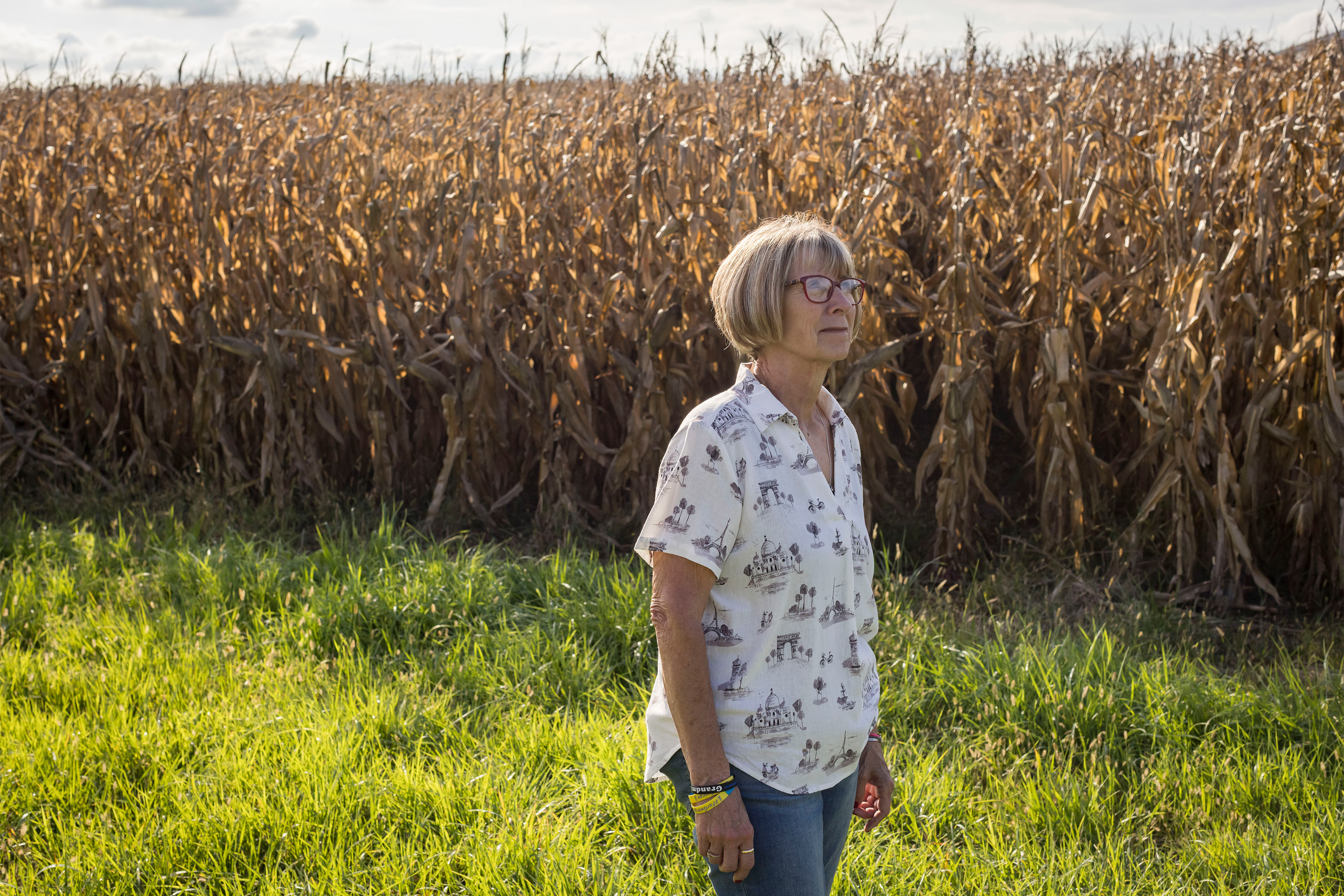
Jager lives in Sumner, Iowa, “less than a quarter mile from where the corn ends and the city begins.” He’s seen family members and neighbors develop diseases that he believes resulted in part from exposure to agricultural chemicals and consumption of unhealthy, processed foods.
In the June Republican primary for governor, Jager voted for Zach Lahn, a businessman and farmer, who ran on a MAHA platform and beat out Trump-backed U.S. Rep. Randy Feenstra. He plans to vote for him again in November.

Many Rural Voters Are Prioritizing Health Issues
About two-thirds of rural voters who support MAHA said it’s “extremely” or “very” important to them to vote for a candidate who does, too, while only 4 in 10 rural voters overall said the same.
Trump sought to seize on MAHA support during his campaign for another term two years ago. Now, amid tight midterm races, Kennedy has campaigned to galvanize the movement’s support. In May, he attended a MAHA bill signing with Iowa Republican Gov. Kim Reynolds, and in August, he went fishing with Lahn, posting about it on social media.
Yet the survey indicates voters are noticing “this weird split in the Trump administration” between what Kennedy messages and what Trump says and does, said David Peterson, a political science professor at Iowa State University.
“It’s this mix of things coming out of D.C., out of different pieces of the administration, that’s confusing people,” Peterson said.
In Iowa, concerns about what’s causing rising cancer rates are “a big deal,” he said. For many people who identify with MAHA, being healthy includes taking on corporate agriculture and pharmaceutical companies that they think cause cancer, he added.
“The sort of populist messaging around that is appealing right now,” Peterson said.
In the poll, views on healthcare access and costs largely diverged along party lines. Most Democratic and independent voters said the Trump administration’s healthcare policies have had a negative impact on their healthcare costs and the health and well-being of people in their communities. Republicans were likelier to say there hasn’t been an impact.
Talking on the phone from her 200-acre farm in Carroll County, Iowa, 71-year-old Donna Klocke said that her husband had died from cancer and that she has neighbors who also have cancer.
“It’s just very prevalent,” Klocke said. “We’re in a farming community. We use chemicals and pesticides and all kinds of things that aren’t necessarily good for us.”
Klocke, a Democrat, said the MAHA movement is a good idea because she cares about being healthy, but she does not consider herself part of it and will not be voting for a candidate who represents the movement.
Kennedy, who was an anti-vaccine activist before entering politics and has sent mixed messages to Americans about getting the measles vaccine, scares her.
“Measles are coming back and polio,” Klocke said. “It’s the measles that really gets me. It’s like, do you not understand how dangerous it is?”
Survey Reflects Angst Over Healthcare
About half of rural voters said their communities don’t have enough doctors or other healthcare providers, and even more said there aren’t enough mental health workers specifically. The share of rural voters who said their community does not have enough hospitals increased to 35% from 21% in a similar question asked in a KFF-Washington Post survey in 2017.
And as with the general population, healthcare, gas, and grocery costs are top pain points. More than 6 in 10 rural voters said they were worried about healthcare costs.
The level of worry varied based on coverage, with rural voters enrolled in employer plans or Medicare less likely to be worried. The survey found that 80% of working-age rural voters on Medicaid were very or somewhat worried about healthcare costs. Last year, Republicans passed a tax and spending bill that cut over $900 billion in projected Medicaid spending over a decade and mandated new eligibility requirements.
Among rural voters who purchase their own insurance, such as the individual coverage plans available on Affordable Care Act marketplaces, 77% said they were worried.
In the tiny community of Lipan, Texas, west of Dallas, Kim Solis and her husband have a handyman-and-home-remodel business and get their insurance on the marketplace. Since Trump was elected again, their premium payment jumped from zero to $166 a month. Their copays went up, and their deductibles each increased by $2,000.
Solis, 62, said she worries what will happen if they get a big medical bill.
“Certainly, we’d be in a world of hurt trying to take money out of savings or getting it out of our 401(k) just to be able to do something about it,” she said.
Most MAHA Voters Are Also MAGA — But Not All
Like the general population, rural voters said they trust their own doctors and healthcare providers for health information over government agencies or officials, according to the poll.
Trust in Kennedy and Trump fell largely along partisan lines. About 10% of rural Democratic voters reported having a “great deal” or “fair amount” of trust in Kennedy, compared with 74% of rural Republican voters. About 5% of rural Democrats and 69% of rural Republicans said they trust Trump a “great deal” or “fair amount” for reliable health information.
While Make America Great Again and MAHA identities are “linked in a lot of ways,” the rising costs of healthcare and groceries pose a challenge for those committed to the MAHA principles that Kennedy promotes, said Peterson, the Iowa State professor.
Buying healthy food “becomes, ‘I can’t afford to do that because of Trump’s policies,’” he said.
In Stamping Ground, Kentucky, Alma Johnson, 65, works as night security at a horse farm. Johnson said gas had gone up but her overall cost of living had decreased since Trump took office.
Johnson voted for Trump in 2016, 2020, and 2024 and said she “pretty much” likes how Trump is running the country. But she said she is not a MAGA devotee, preferring to “think for myself.”
MAHA, however, is an easy sell for Johnson because, she said, she doesn’t think people should be able to buy junk food through the Supplemental Nutrition Assistance Program, or SNAP.
Still, she said she hasn’t seen much impact from the Trump administration’s healthcare policies, including the new food pyramid.
“It takes a long time to change people, their habits, their thoughts, or the things they do,” Johnson said.
About the Poll
The KFF-AP Rural Voters Survey was conducted online and by telephone Aug. 12-24, 2026, among 2,241 registered voters living in rural areas, defined as census tracts that fall within codes 5-10 of the U.S. Department of Agriculture’s 2020 Rural-Urban Commuting Area codes. Voters were reached through a combination of the probability-based SSRS Opinion Panel and a registration-based sample from the L2 voter file. Overall results have a margin of sampling error of plus or minus 3 percentage points, including design effects due to weighting. Error margins are larger for subgroups. In collaboration with the AP, KFF researchers worked to design the survey sample and questionnaire and analyze and report findings.
This report is from a collaboration between KFF Health News and The Associated Press.